Published · By Brixter Construction
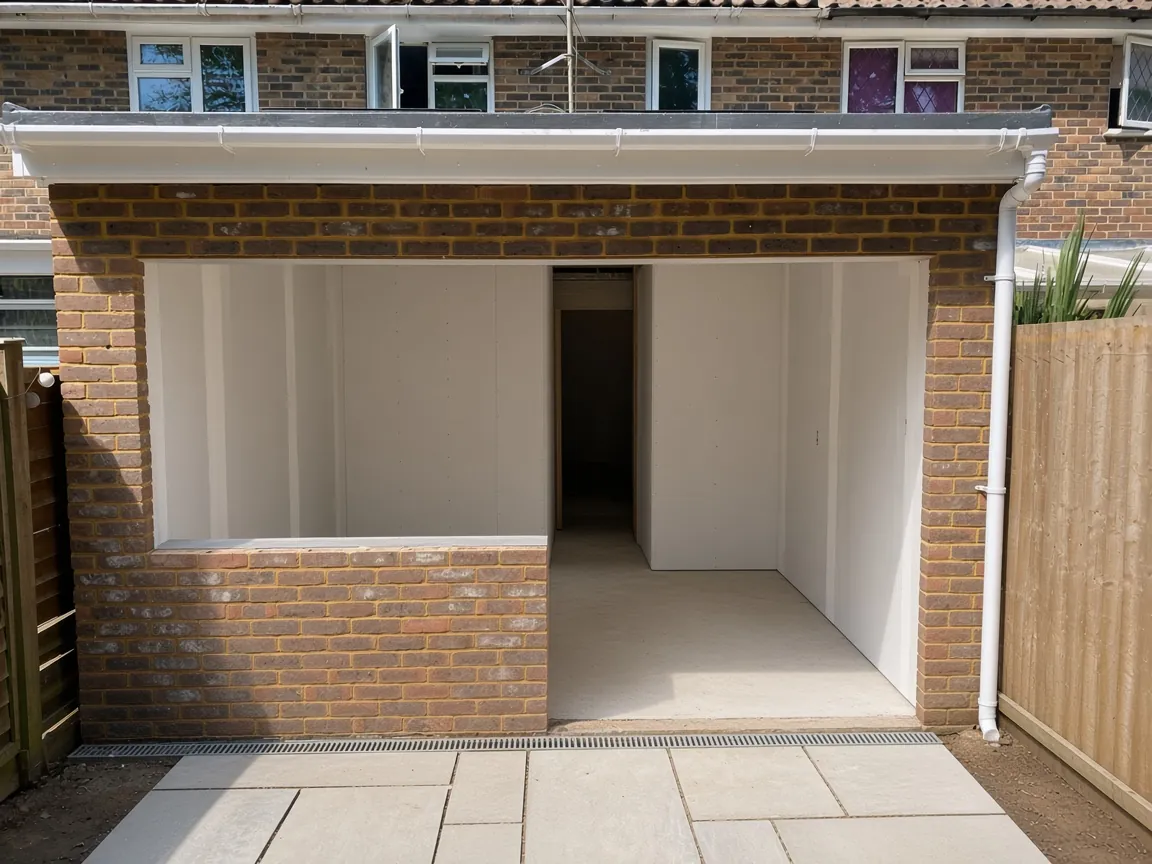
If you live in a semi-detached or terraced house, or your extension will come close to the boundary, the Party Wall etc. Act 1996 may apply. Party wall agreements sit alongside planning permission and Building Regulations, but they are a separate process with their own rules and timescales. This guide explains the basics for homeowners in Hassocks, Burgess Hill, Haywards Heath, Hurstpierpoint and Ditchling, Cuckfield, Lindfield and the rest of Mid Sussex and Sussex.
This is general guidance, not legal advice. It is based on the GOV.UK guidance, the government’s explanatory booklet and the Party Wall etc. Act 1996, which apply in England and Wales. If you are unsure whether the Act applies to your extension, take professional advice before work starts.
Do I need a party wall agreement for an extension?
Not every extension needs one. GOV.UK says you must tell your neighbours if you want to carry out building work near or on your shared boundary or party wall. Under the Act, you must give notice to the neighbouring owners (the Act calls them “adjoining owners”) if your work involves any of these:
- Building a new wall on or at the boundary (section 1 of the Act), for example the side wall of an extension built up to the line of junction with next door
- Work to an existing party wall or party structure (section 2), such as cutting into it to take the bearing of a steel beam, raising its height, cutting off projections like a chimney breast, or demolishing and rebuilding it
- Excavating near a neighbour’s building (section 6), for example digging the foundations for an extension
GOV.UK says you do not need to tell your neighbour about minor changes such as plastering, adding or replacing electrical wiring or sockets, or drilling to put up shelves or cabinets.
People often talk about a “party wall agreement”, but there is no single official form with that name. In practice the paperwork is either your neighbour’s written consent to your notice or, if there is a dispute, a party wall award drawn up by a surveyor or surveyors. GOV.UK says any agreement you reach should be in writing.
What counts as a party wall?
The government’s explanatory booklet describes two main types. A wall is a party wall if it stands astride the boundary between land belonging to different owners, whether it is part of one building, separates two buildings, or is a “party fence wall” such as a masonry garden wall. A wall is also a party wall if it stands wholly on one owner’s land but is used by two or more owners to separate their buildings. Wooden fences and hedges are not party fence walls.
A wall built wholly on one owner’s land, or the external wall of a house built up to but not astride the boundary, is not a party wall. Work near it can still be covered by the Act, for example if you excavate close to it.
Digging foundations near next door
Section 6 can apply even if your extension does not touch a shared wall. It applies if you excavate, or excavate for and build a structure:
- within 3 metres of any part of a neighbour’s building or structure, where any part of your work will go deeper than the bottom of their foundations, or
- within 6 metres of any part of a neighbour’s building or structure, where your work will meet a line drawn down at 45 degrees from the bottom of their foundations
The notice must say whether you propose to underpin or otherwise strengthen or safeguard the neighbour’s foundations, and it must come with plans and sections showing the site and depth of the excavation and where the new building will go. The booklet points out that, for this section, a neighbour can count as an adjoining owner even if another property sits between you.
Party wall notice periods
The notice period depends on the type of work:
- Work to an existing party wall (section 2): at least two months before the work starts
- A new wall on the boundary (section 1): at least one month before the work starts
- Excavating near a neighbour’s building (section 6): at least one month before the work starts
The booklet says a notice is only valid for a year, so do not serve it too long before you want to start. Your neighbour can agree in writing to an earlier start, but they do not have to. An extension can involve more than one type of work, so you may need more than one notice.
How to serve a party wall notice
The booklet recommends talking the plans through with your neighbours before giving notice, because a notice that does not come as a surprise is more likely to be agreed. The legal duty to give notice is on you as the building owner. You can serve it yourself, as you do not need to appoint a professional adviser, or a professional adviser can give it on your behalf. There is no official form, but the notice needs to include:
- your name and address (joint owners must all be named)
- the address of the building being worked on
- a full description of the proposed work (plans are required for excavation work)
- the date you propose to start, which must be after the notice period
The booklet advises dating the notice and saying clearly that it is a notice under the Act, and it includes example letters you can base yours on. You must notify all adjoining owners, which can include the freeholder and a leaseholder whose lease is for more than a year. Notices can be handed over in person, posted, or emailed if the neighbour has said they are happy to receive notice by email.
How your neighbour can respond
Once you have served notice, your neighbour can:
- consent in writing, and the work can go ahead as agreed
- refuse consent, which starts the dispute resolution process
- serve a counter notice asking for extra work to be done at the same time. This must be served within a month of your notice, you must respond within 14 days, and the neighbour pays for extra work that benefits them
GOV.UK is clear that you cannot assume no response means agreement. For work to an existing party wall or an excavation, if your neighbour has not consented in writing within 14 days, a dispute is treated as having arisen. For a new wall astride the boundary, if your neighbour does not consent within 14 days, you can only build the wall wholly on your own land and at your own expense.
Your neighbours cannot stop you making changes to your property that are within the law, but GOV.UK says they can affect how and when the work is carried out.
If you cannot agree: party wall surveyors and the award
If there is a dispute, you and your neighbour can appoint one “agreed surveyor” together, or each appoint your own. The two surveyors select a third surveyor, who is only called in if they cannot agree. Surveyors must act impartially and consider the rights of both owners. You cannot act as your own surveyor, and if your neighbour refuses or fails to appoint one, you can appoint a surveyor on their behalf.
The surveyors draw up a party wall award. GOV.UK describes it as a legal document setting out what work should happen, how and when it will be carried out, and who will pay for which part, including surveyors’ fees. The booklet adds that it often includes a record of the condition of the neighbour’s property before work begins, so any damage can be properly identified. Usually the building owner pays the costs of the award where the work is solely for their benefit, and the surveyors decide who pays. Either owner can appeal against an award at a county court within 14 days of receiving it.
During the build
While the extension is being built, you must avoid causing unnecessary inconvenience, protect your neighbour’s property from damage caused by the work, and fix or pay for any damage that is caused. The booklet says the building owner is legally responsible for putting right damage caused by the works, even if it is caused by their contractor. Your neighbour must allow surveyors and workers access during usual working hours where it is needed to carry out the work, with 14 days’ notice except in an emergency.
What if notice is not served?
The Act has no enforcement procedure of its own, but the booklet warns that if work starts without notice being given properly, a neighbour can seek to stop it through a court injunction or seek other legal redress. It also notes that the property information forms used when you sell your home may ask about notices and disputes under the Act. So it is worth dealing with the Party Wall side before the build starts.
Planning permission and Building Regulations are separate
A party wall agreement does not replace planning permission or Building Regulations approval, and getting those does not remove the need to follow the Act. The booklet says many councils mention the Party Wall Act to people applying for planning or building control as good practice, but they do not have to. That applies whether your home is covered by Mid Sussex District Council, Lewes District Council, Brighton & Hove City Council or the South Downs National Park Authority. For the other two permissions, see our guides to planning permission for a rear extension in Mid Sussex and Building Regulations for a house extension.
Useful links
- GOV.UK: Party walls and building work
- GOV.UK: The Party Wall etc. Act 1996, explanatory booklet
- legislation.gov.uk: Party Wall etc. Act 1996
Planning a house extension?
Brixter Construction are house extension builders based at 29b Keymer Road in Hassocks, building rear, side and wraparound extensions across Mid Sussex, including Hassocks, Burgess Hill, Haywards Heath and Lewes. We can talk through the Party Wall side of your project when we quote. See our house extensions page, or call Josh on 07518 403458 (Mon–Fri, 7:30am–6pm). You can also send us your details through our contact form. Quotes are free and without obligation.